
Perimenopause and Stomach Gurgling: Should I be Worried?
Is the gurgling and rumbling in your stomach making you uneasy?
Are you concerned about what it might mean?
I completely understand your concern. That gurgling can sound, and feel, like there’s a natural disaster about to occur, leaving you with a million questions in your head.
Should I be worried how loud it is? Are these noises normal? Why am I getting these now, in perimenopause, when I never experienced them before?
This easy-to-understand article will explain where and why we get these noises in perimenopause, if you should be concerned, and help you to understand how to best manage it with food and lifestyle.
Let’s get to the good stuff.
What is perimenopause?
Perimenopause encompasses the symptomatic period of menopause (1) – the term itself means “around the menopause”.
It refers to the hormonal changes, body changes and psychological changes that can happen during this time of transition. In general, it begins with changes in the menstrual cycle and ends around one year after your last period.
Where do stomach gurgling noises actually come from?
You may be surprised to know that the noises are not just coming from your stomach. Our small and large intestines contract and relax, without us having any say in the matter!
This contracting and relaxing moves food, liquid and sometimes air, through our gut to help us digest and absorb the nutrients - this is called peristalsis (2).
The name for the gurgling noises made by our intestines is actually called borborygmi (you can thank me when you win your next pub quiz with that one).
Why does the stomach (and intestines) gurgle?
Our stomach and intestines can make noises for a variety of reasons and it all comes back to peristalsis (rhythmic movement of food, fluid, and air through the gut).
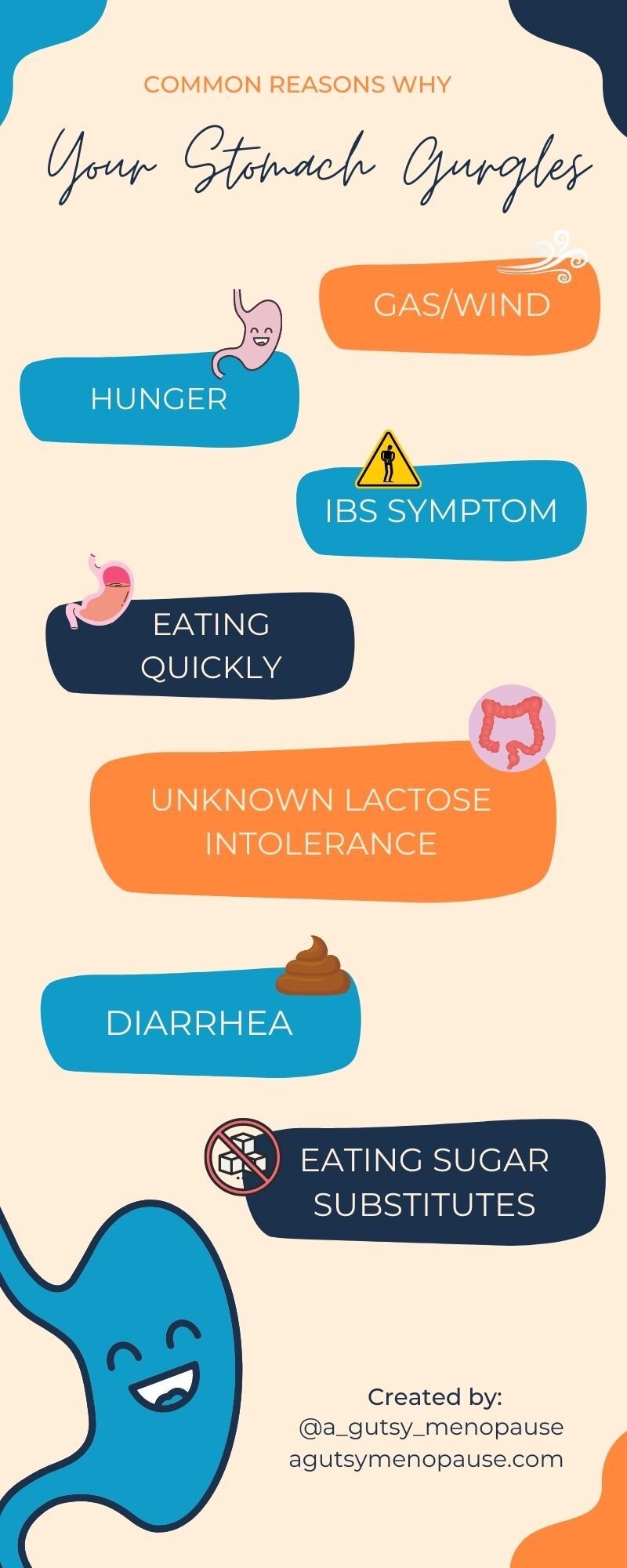
More common reasons are:
Hunger
Eating quickly - this can trap air in the intestines and cause an increase in noise
Gas, Wind, Air
Symptom of IBS (irritable bowel syndrome)
Unknown lactose intolerance (unable to digest the sugar, lactose, found in dairy products)
Eating sugar substitutes - mannitol, sorbitol, xylitol (note, the ‘ol’) are sugar alcohols, these can pull water into the gut and cause gurgling and discomfort
Less common reasons Are:
Diarrhea - our intestines are contracting and relaxing at a faster rate, causing an increase in movement and sound
Partial Bowel Blockage – bowels trying to remove a partial blockage can produce stronger contractions trying to clear the blockage (3)
Should you be worried about the gurgling?
In a clinical setting, we actually look for bowel sounds as a good sign, as a lack of sound in the bowel can indicate serious problems such as a bowel blockage or ileus (a blockage caused by a slow or non-moving bowel).
However, loud and frequent bowel sounds accompanied by other symptoms could be a sign of a serious problem that requires immediate attention.
These symptoms could include:
severe abdominal pain and or cramping,
prolonged abdominal discomfort,
nausea and or vomiting
change in bowel movements
If you have any of the above symptoms with frequent and loud stomach gurgling, please seek medical attention.
What does the increase in stomach gurgling have to do with perimenopause?
Simply put, our hormones affect our gut.
Throughout our gut are cells with receptors for estrogen and progesterone (4). With fluctuating and, particularly, decreasing amounts of these hormones during perimenopause, gut symptoms, such as gurgling, diarrhea, gas, wind and bloating, tend to be more frequent. This is particularly true for those with IBS (5).
What to do about the gurgling sounds?
If they aren’t serious (see the bit about ‘Should You Be Worried’, above) but they bother you, you can troubleshoot by trying to identify some of the triggers that make the gurgling worse.
Take note of when your gurgling and other symptoms are particularly bothersome and work back from there. A food symptom journal can be helpful here.
Some general suggestions that may help are:
Set a timer at the dinner table and practice sitting down until it goes off, this can help you eat slower
Begin a daily mindfulness practice to help manage IBS or new gut symptoms
Try reducing the amount of sugar substitutes (particularly sugar alcohols) you eat
Try and eat at regular times throughout the day without skipping meals to reduce excessive hunger
Final thoughts
In summary perimenopause is a time of hormonal change for the body and this can, and often does, affect our gut.
Stomach gurgling is unlikely to be a sign of a serious problem unless accompanied by other symptoms such as vomiting, bowel movement changes, and or pain.
If bothersome, you can manage your gurgling by keeping a food-symptom journal and minimising the triggers found, you may want the assistance of a dietitian, doctor or trained healthcare professional to help you with this.
Want to save this article? Click here to get a PDF copy delivered directly to your inbox.
A Gutsy Menopause is a specialist gut health nutrition clinic run by nutritionist and dietitian, Emily Foster. We offer consultations, workshops and online courses.